
A response to Dumbing us Down by John Taylor Gatto
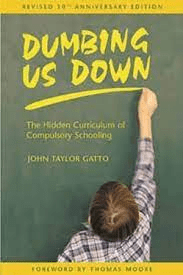
I will first include my three big learnings from this book.
INDIVIDUALITY
In this book, Gatto argues that public school has in a sense erased individuality and instead praises conformity. The one to conform gets the good grade, the accolades the public praise. The student who excels at math is given a medal, the student who reads poorly is left with nothing. The student who behaves and is quiet gets the A ,the student who can’t sit still gets detention.

We threaten to make sure children conform. We teach them rules that aren’t real, like you can’t talk in a hallway. We teach them authority rules because alternatively, the teachers can.
In my grammar school, I wore a uniform. I was sent to the office with polish remover to take the purple off the nails starving for individuality.
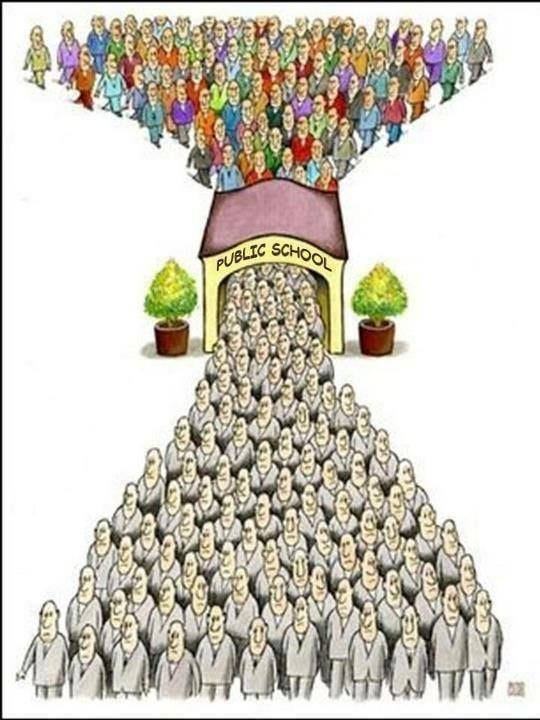
With homeschooling, children are celebrated for the things that make them an individual. They are praised for what they are good at, and the things they are interested in. They are allowed to be free, and talk and ask questions. Gatto claims that students will excel more from being able to explore and learn about what’s important to them than being forced to learn about things that they truly won’t need for their daily lives.
Individuality reigns in homeschooling and learning is genuine.

THE BELLS
One of the biggest things that resonated with me from the book was talking about the bells! Transition can be so hard for me, in real life. Transitioning from one activity that has obvious importance to me if I’m doing it, to another one, especially a non preferred one, can be devastatingly difficult.

In public education system, Gatto claims nothing is important, because of the bells. We teach students that we must live by the bells. You’re reading a novel? Well, it can’t be that important because we will have to put it away when the bells ring. When the bell tells us so, we must transition.

Homeschooling allows students to truly put time and effort into learning what is valuable to them. A project could take a student 5 hours, and those hours may be more enriching that weeks in a class at school, 33 minutes a day, learning always ceased at the bell.
COMMUNITY
Gatto argues that public education, being fairly new to the scene, cannot replace true and loving community. In the past, the community naturally educated our children. They learned to sew with their families, maybe learned a craft from a community member. A small community was education. They didn’t need schools in a sense because they had a “village.”
However, time went on, and things were different. The boom of people, the moving around, immigration. Communities grew larger, unforgiving in a sense.
Cities don’t always have the ‘it’s a village’ mindset. And so people need to find their communities somewhere.
I see where Gatto is coming from in the sense that community is vital not only to education and learning, but to overall well being in this life.
Where I disagree, is that public schools cannot be that place.
Every single year, I develop a community of learners in my room.
So many things in this book are absolutely true. Individuality can be hard when it comes to public education or institutionalized education in general. Transitions are unrealistic, and community can be scarce or difficult to find– but I believe these are all possible.
No matter what though, I find myself to be a huge proponent of public education and here is why.
HOMESCHOOLING VERSUS INSTITUTIONAL SCHOOLS
There are so many reasons that homeschooling is superior and effective, but there is so much privilege in assuming that anyone can homeschool. Having the financial resources to homeschool is so very wonderful, but not realistic for the majority of families in 2024.
The reason that public schools have become such an institution, is also because there’s a need. There’s a need to have children be taken care of, and by enforcing curriculum and public school systems it ensures that everyone has access to some kind of academic rigor.
IT TAKES A VILLAGE
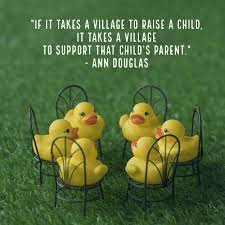
Sure if everybody could homeschool, and know that someone in a community is around to teach their kids the skills they need they would. Not everybody has that village or community, and so while schools are forced on some, they are a built-in community, a village of support that otherwise many might not have.
There are so many disagreements about where students should and would be allow to go to school. All arguments aside, I believe people should be given the opportunity to go to school close to their home. Community is only effective if you can access that community.
WHAT DO YOU LEARN IN A CLASSROOM
Now, as a public educator, I have had so many issues when it comes to figuring out what to keep in the curriculum, figuring out how to make the curriculum come to life or even relate to real world things at all.
At the end of the day, some of what I teach at school is how to learn. Metacognition is so important and not a lot of people have ever thought about how they learn.
I always like to say that I want my students to leave my classroom better people. That means even if they cannot meet every single Algebra standard, I know they’re still leaving with community, and a better sense of themselves and their learning. They are leaving with empathy which they’ve both given and received over the year in our community of learners.
Those things are so much more important to me than combining like terms. There’s so much algebra that you use every single day (don’t fight me on this, I’ll go on a tangent.) However, there is so much in algebra that you do not use. This is what people focus on.
No, you don’t need to know what a parabola is every day. But you do need to know how you learned about that parabola.
Students should leave my classroom better people and better learners. The end.
COMMUNITY
Homeschooling in a nutshell embodies community. I understand that community is so difficult in public schools, and in big schools in general, but it is possible.
Community comes in pockets though.
You don’t need to be friends with everyone in a big school building, but you need to have your community. I say that knowing that it’s the same for students and teachers.
Community means you have a group where you feel safe.
Homeschooling puts so much on the parents. Socializing is so difficult when it is not built into your everyday existence, and I don’t mean just socializing with your parents or guardian.
Parents that homeschool children have to make sure that their children/ students are enriched and going to all these other things, while probably only meeting other homeschooled students.
Socialization is so important to me. I’m the kid who got the “ talks too much in class” report card comment, always. I learned through conversing and speaking and listening to other people’s opinions. This is one of the reasons why I love social media!
I love the heck out of my parents but I could not have gotten that same thing at home. I needed other kids around. Also I’m not sure they would have made it through my schooling years listening to me chat at them, and question them and the world all day.
BIAS
I am so proud of my Masters in Education. I am a proud public school teacher. I know the research based methods I use are effective. I’m proud of what I do.
There’s my bias. I know that. I’m putting it out there for you.
While ironically this author was also a public school teacher (though very different being a retiring, recipient of teacher of the year), he became a huge proponent of homeschooling by being in that system.
I find myself to be the opposite. More and more I want and have a need to fight for equity in education.
MILESTONES
There are SO many milestones in a child’s schooling life and I would never want to take those away from any child.
Hopefully one day my children are going to deal with all the picture taking I’ll be doing at their prom, and every holiday show before that.
My nieces, and nephews, whether blood or sorority sister related, will deal with me sobbing at graduation and bothering their best friends– who I’ve also watched grow.
My door will be open for lunch for my students who had their first best friend fight or whose boyfriend turned off their snap location for no reason. And yes, I agree that’s trash.
MY SCHOOL LIFE
I love school.
I always have.
From preschool, and meeting my first best friends there, I was the leader of the lunch pow wow as my teacher told my mom.
I loved my Catholic grammar school Our Lady Queen of Peace. I loved learning and reading, and assemblies, and singing in the choir. And recess. And remembering 50 cents for a bag of chips at lunch. I loved story time, and timing myself doing a map of the world puzzle. I loved dress down day, and free pizza for reading books. I love my grammar school friends, a still beloved (though further removed) community. I cherish the memories. I watch their social media victories and beam with pride and joy, I cry for their sorrows.
I loved my public, nerdy technical high school– Staten Island Tech. I loved prom. I loved my teachers, and even more, my coaches. And texting my friends to meet in the hall and stowing away to the bathroom for 5 minutes of gossip, or passing a long note to read in class. (Saved some of those by the way and they rock- many doodles drawn of my teachers and literal high school content.) I love my high school friends, my still beloved home community.
I cannot compare private or public education to homeschooling because I don’t have that experience.
What I can say is that my small Catholic school was a beautiful and close community. I’ve moved away but they are still a part of me.
My public, but specialized, and also fairly small high school was one of the most special and wonderful places where I felt at peace and belonging. I learned so much more than just academic rigor in that school. I learned how to be a person and I learned how to be a friend. I learned how to be a student. College felt a lot easier for me than I felt for some around me, because I had the experience of community.
OH NO HE DIDN’T
I see how homeschooling could make community easier, but I did take offense to one thing in the book. The author states that community in public schooling is false in a way, and that similar to sports you lose connection so quickly. He seems to think that after the season ends, after the semester, etc., that the connection is gone. He thinks community fades over time, and the importance of that connection is lost.
I don’t lose connection. I may lose physical connection but every student that I’ve ever had as a part of me. As is every teacher. Every single year and classroom. The teaching assistants who helped me every step of the way. The coworkers who cried with me when we lost students, sometimes well after we had them.
Those kids are my kids forever. That staff. Every year I had met and embraced people who became important in my life in some way, even as a memory.
You don’t stop caring because you don’t see someone every day. You don’t stop caring because you move away and grow your own life.
The teachers I’ve had will never realize how much I speak of them kindly and the experiences they gave me. I didn’t lose that even when I moved on to become a teacher in my own life.
CLOSING
If you are in the wonderful position to homeschool, have gratitude because you are surely blessed. Enjoy the days with your children, and build individuals with confidence.
As for me, public schools may not be perfect, but I refuse to give up on the system.
We can only make it better by working hard to eradicate some of the issues that this book has clearly pointed out.
I work every single day to support students in becoming individuals. I try to embrace them for what they bring to the table and work with those strengths. I work on balance and working within the bells, which in a way relates to their eventual work life balance too.
And mostly I work on building community– loving, genuine, and forgiving community, where students feel safe. That is possible in public schools if we work hard and focus on things at the classroom level.
 Michie Smashing Thoughts
Michelle,
I didn’t read Mr. Gatto’s book but your reflections on the gist of it were clear, articulate and I could not agree with you more. I was a terrible student, but I cannot help but wonder where I would be in life now if not for the socialization aspects and sense of bottom line discipline I received form going to school and functioning for at least a few hours a day in that community. I am sure homeschooling works for some but I do question how much critical thinking is inspired in some of the households that begin their children’s education from a default of distrusting anything provided by government. I realize that can also be a set back particularly in schools with a religious background, but not always. And just by virtue of being around so many different from oneself, one cannot help but bump into other ideas, cultures etc. Nice work. Happy to read this. Glad to see you a Sean and Thanksgiving. Stay well.
Tom
Sent from my iPhone
LikeLike
Smashing!
Cheryl B Williamson, CPA, MBA 119 Guyon Avenue Staten Island, NY 10306-3928 Tel: (718) 979-9433
LikeLike